


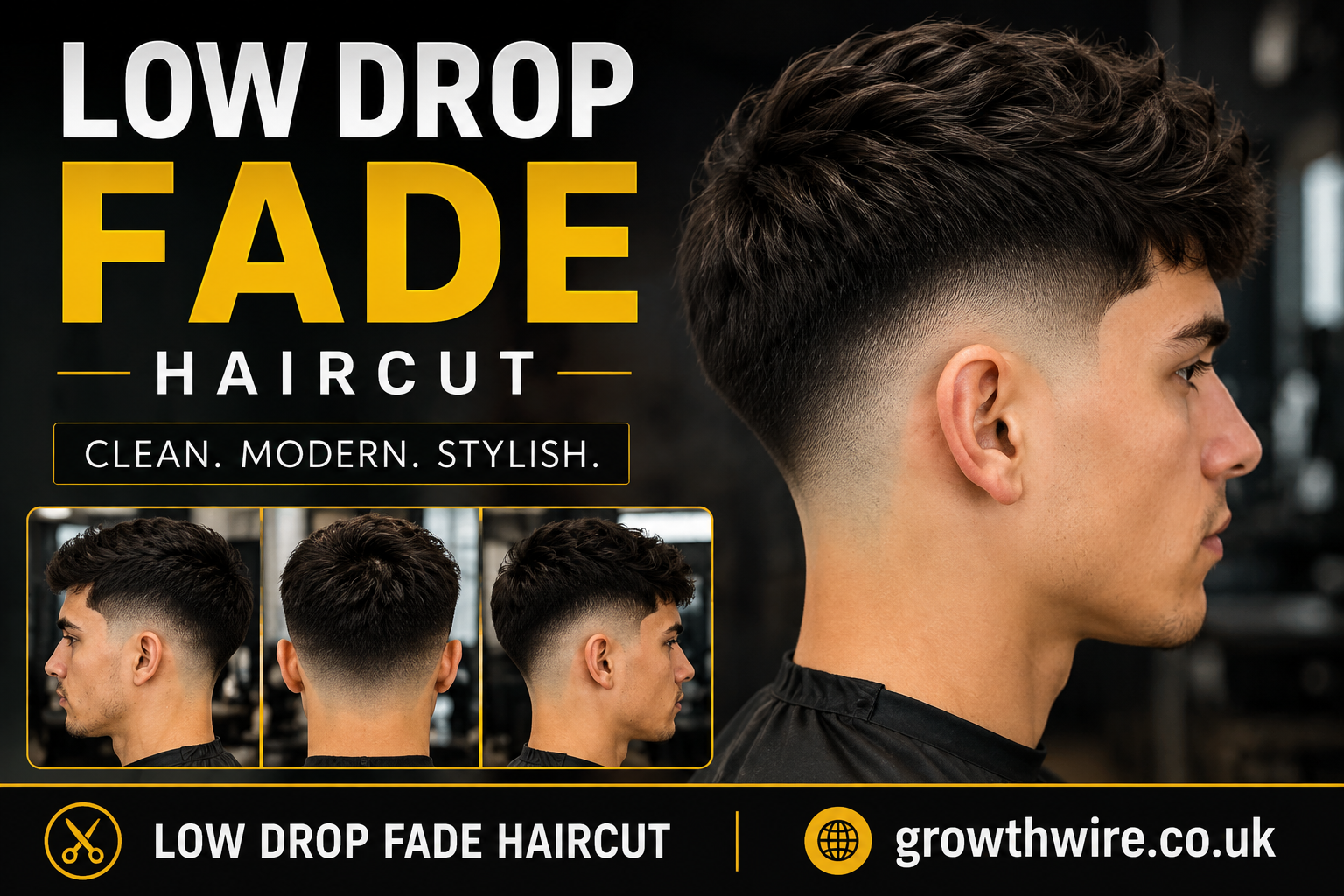
A great haircut can completely change the way a person looks and feels. Among the many modern men’s hairstyles available today, the low drop fade haircut stands out because it combines a clean appearance with natural shape and plenty of styling flexibility. It is subtle enough for professional environments while still having the sharp finish associated with contemporary barbering.
Unlike a traditional low fade that follows a fairly straight path around the head, a drop fade curves downward behind the ears and toward the nape of the neck. This creates a more customized silhouette and allows the haircut to follow the natural shape of the head. The result is a smooth transition from longer hair on top to very short hair around the lower sides and back.
One of the biggest advantages of this style is its versatility. It can be combined with curly hair, straight hair, waves, textured crops, pompadours, quiffs, buzz cuts, and many other looks. Whether someone prefers a conservative haircut or a more fashionable appearance, the fade can be adjusted to suit their preferences.
What Is a Low Drop Fade Haircut?
A low drop fade haircut is a tapered hairstyle in which the fade begins relatively low on the sides of the head and gradually becomes shorter as it moves downward. The defining feature is the way the fade drops behind the ears rather than continuing at the same height around the head.
The barber typically creates a gradual transition from the longer hair near the temples and upper sides to shorter hair around the ears and neckline. The fade may eventually reach skin level, depending on whether the customer wants a skin fade or a slightly softer finish.
The word “drop” describes the curved shape of the fade. Instead of forming a straight horizontal line, the transition follows the natural contours of the head. This can make the haircut look more dimensional and balanced.
The “low” part refers to the position where the fading begins. Because it stays lower, more hair remains on the sides compared with a mid or high fade.
Why the Low Drop Fade Haircut Is So Popular
The popularity of this haircut comes from its ability to balance style and practicality. Some fades can look extremely dramatic, especially when they remove a large amount of hair from the sides. A low version provides a more understated alternative.
Another reason people choose it is adaptability. The top can be styled in numerous ways without changing the basic fade structure. Someone can wear textured hair one day and a neatly combed style the next.
The curved transition also gives the haircut a more natural appearance. Instead of creating an abrupt visual break, the fade follows the head’s shape.
For people who want a modern haircut without committing to an extremely bold look, this can be an excellent middle ground.
Low Drop Fade Haircut vs. Low Fade
Although these two styles are closely related, they are not exactly the same.
A traditional low fade generally follows a relatively consistent path around the head. The fade begins low and gradually becomes shorter toward the bottom.
A drop fade changes direction behind the ear. The fade dips lower toward the back of the head, creating a curved appearance.
This difference may seem small, but it can have a noticeable impact on the overall shape of the hairstyle. The drop effect can make the haircut look more sculpted and customized.
If you are unsure which option is right for you, ask your barber to explain how the fade will be positioned based on your head shape and preferred hairstyle.
Low Drop Fade Haircut for Straight Hair
Straight hair works particularly well with this style because the clean sides create a strong contrast with the top.
For a classic appearance, the hair on top can be left several inches long and styled with a side part. A small amount of styling product can add control without making the hair look overly stiff.
Another option is a textured crop. The top can be cut with layers or texture, allowing the hair to appear fuller and more relaxed.
For a modern look, straight hair can also be styled into a messy fringe. The controlled fade keeps the sides neat while the top remains intentionally casual.
Low Drop Fade Haircut for Curly Hair
Curly hair and a drop fade make an excellent combination. The fade creates structure around the sides while allowing the curls to remain the main feature.
Rather than cutting the curls extremely short, a barber can preserve length on top and carefully shape the sides. This creates a contrast between the textured top and clean lower sections.
People with tighter curls can ask for a gradual fade that avoids making the transition too harsh. A skilled barber can adjust the fade according to curl density and hair growth patterns.
The result can be stylish without requiring excessive daily styling.
Low Drop Fade Haircut for Wavy Hair
Wavy hair offers another excellent opportunity for this haircut. Natural waves can provide volume and movement on top, while the fade creates a cleaner outline.
A textured top with a little styling cream can produce a relaxed appearance. Alternatively, waves can be brushed backward or toward the side for a more polished finish.
The key is maintaining enough length to show the natural wave pattern. Removing too much length from the top can make the hairstyle lose some of its character.
Low Drop Fade Haircut With a Beard
A beard can complement the structure of a fade particularly well. The haircut provides a clean transition around the ears and neckline, while the beard adds definition around the lower face.
The barber can blend the sideburn area into the beard so there is no obvious visual break. This technique can create a smoother connection between the haircut and facial hair.
Short stubble works well with a subtle fade, while a fuller beard can be paired with a stronger transition.
However, the beard does not necessarily have to match the haircut exactly. Different lengths can create a more natural appearance.
Low Drop Fade Haircut With a Textured Crop
A textured crop is one of the easiest ways to make the style look contemporary.
The top is usually cut with visible texture and may include a short fringe. The sides remain tightly faded, producing a strong contrast between the two sections.
This version can be particularly practical because it does not require complicated styling. A small amount of matte paste or clay can separate the strands and emphasize texture.
For someone who wants a low-maintenance modern hairstyle, this combination is worth considering.
Low Drop Fade Haircut With a Quiff
A quiff adds height and volume to the top while keeping the sides controlled.
To achieve this look, the hair on top needs enough length to be lifted and shaped. A blow dryer can help create volume, while a styling product provides hold.
The fade keeps the lower sections tidy, allowing the quiff to become the visual focus.
This style can be adjusted from subtle to dramatic depending on how much height is created.
Low Drop Fade Haircut With a Side Part
The side part remains one of the most timeless choices for this type of fade.
The combination works because the structured top contrasts with the gradually tapered sides. It can be styled neatly for formal settings or made slightly textured for a more relaxed appearance.
A natural side part can be created by following the direction in which the hair naturally grows. For a more defined appearance, a barber can establish a hard part with a precise shaved line.
Low Drop Fade Haircut for Thick Hair
Thick hair can sometimes appear bulky around the sides. A well-executed fade helps remove unnecessary weight while keeping the top full.
The barber can use techniques such as layering and texturizing to make the top easier to manage.
Rather than removing too much hair, it is often better to preserve enough density to maintain the desired shape. The fade can handle much of the cleanup around the lower sides.
For thick hair, communication with the barber is particularly important because the haircut should account for how much volume the hair naturally creates.
Low Drop Fade Haircut for Thin or Fine Hair
People with fine hair can also wear this style successfully. In fact, keeping the fade low can help preserve the appearance of density around the sides.
The top should usually avoid excessive thinning. Instead, texture can be added strategically to create movement.
A matte styling product may also be preferable because overly shiny products can make fine hair appear flatter or thinner.
A short textured top is another useful option because it can make the hair look fuller without requiring large amounts of product.
Choosing the Right Fade Level
One of the most important decisions is how low the fade should sit.
A very low fade leaves more hair around the temples and lower sides. This can produce a softer, more conservative result.
A slightly stronger low fade creates greater contrast while still maintaining the overall low placement.
The right choice depends on personal preference, hair density, head shape, and the desired top hairstyle.
If you are getting the haircut for the first time, starting conservatively can be a smart approach. You can always request a stronger fade during a later appointment.
How to Ask Your Barber for the Style
Clear communication can make a major difference.
Instead of simply saying that you want a fade, explain that you want a low drop fade and describe how much length you want to retain on top.
You can tell your barber:
- Keep the fade low.
- Let the fade drop behind the ears.
- Blend the sides gradually.
- Keep the top at the desired length.
- Avoid taking the fade too high.
- Blend the neckline naturally.
- Add texture if appropriate.
Bringing a reference photograph can also help. Even experienced barbers interpret haircut terminology slightly differently, so a picture can make your expectations clearer.
How to Style the Hair
Styling depends heavily on the length and texture of the hair.
For short textured hair, a small amount of matte clay or paste may be enough. Work the product through dry or slightly damp hair and shape it with your fingers.
For longer styles such as quiffs and pompadours, blow-drying can provide additional volume. Apply a suitable pre-styling product, direct the hair into the desired position, and finish with a small amount of styling product.
Curly hair generally benefits from lightweight creams or curl-enhancing products that preserve natural movement.
The goal should be to complement the haircut rather than cover the hair with excessive product.
Maintenance and Barber Visits
A fade looks its sharpest when the transitions remain clean. Because hair grows continuously, the lower sections can begin losing definition after several weeks.
Many people choose to visit their barber every two to four weeks, depending on how quickly their hair grows and how precise they want the fade to remain.
If you prefer a more natural appearance, you can wait longer between appointments.
The top usually does not need to be trimmed every time. Some people simply refresh the fade and neckline while preserving the length above.
This approach can be both practical and economical.
Does a Low Drop Fade Suit Every Face Shape?
The style can be adapted to most face shapes, but the details matter.
For rounder faces, maintaining some height on top can create a more elongated appearance. A low fade can also help avoid making the face look wider.
For longer face shapes, excessive height may not always be desirable. Keeping the top more controlled can create better proportions.
Square faces often work well with structured styles because the natural facial angles already provide definition.
Oval face shapes are generally flexible and can accommodate many variations.
Ultimately, the haircut should be customized rather than selected solely according to a face-shape chart.
Common Mistakes to Avoid
One common mistake is asking for a fade that is too high. If you specifically want the low appearance, make sure your barber understands where you want the transition to begin.
Another mistake is ignoring the back of the haircut. The drop effect is especially important from the side and rear, so make sure the shape looks balanced from every angle.
Overusing styling products can also reduce the natural appearance of the haircut. Start with a small amount and add more only when necessary.
Finally, choosing a style that requires more maintenance than you are willing to provide can lead to frustration. Consider your daily routine before selecting a highly styled top.
Is This Haircut Professional?
Yes. One of the major advantages of this style is that it can be adapted to professional environments.
A conservative version with a neat side part or short textured top can look polished and appropriate for an office.
For more creative workplaces, a sharper fade and more noticeable texture can provide additional personality.
The key is controlling the contrast and top length. A haircut does not have to be extremely short to look professional.
Low Drop Fade Haircut for Teenagers and Young Adults
Younger people often prefer this style because it offers plenty of room for customization.
A textured fringe, curly top, messy crop, or longer swept-back style can all work with the same basic fade structure.
The haircut can also change as personal preferences develop. Someone might start with a short top and gradually grow it longer while keeping the same fade.
This flexibility makes the style suitable for people who enjoy experimenting without completely changing their haircut every time.
Seasonal Styling Ideas
During warmer months, keeping the top shorter can make the hairstyle easier to manage. A textured crop paired with a clean fade is practical and lightweight.
In colder months, longer hair on top can provide additional styling possibilities. A swept-back look, quiff, or loose textured style can add volume and character.
The fade itself does not have to change dramatically with the seasons. Instead, the top length and styling method can be adjusted.
How to Keep the Haircut Looking Fresh
Daily maintenance does not have to be complicated.
Wash the hair according to its texture and needs rather than automatically shampooing it excessively. Use conditioner when appropriate, particularly if the hair is dry or curly.
Brush or comb the top into the desired shape, then use a small amount of styling product.
Keeping the neckline clean can also make a noticeable difference between barber visits. However, avoid attempting major changes to the fade yourself unless you have experience with clippers.
Regular professional maintenance remains the safest way to preserve the intended shape.
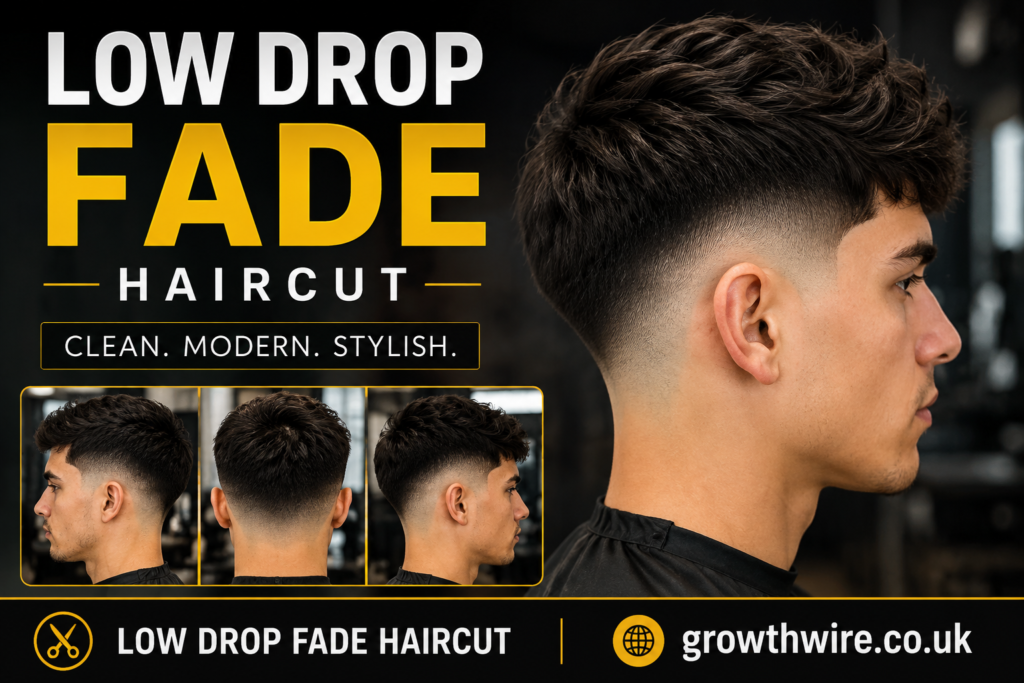
Low Drop Fade Haircut: Finding Your Ideal Version
There is no single version that everyone needs to copy. The best haircut is the one adapted to your hair type, lifestyle, facial proportions, and personal taste.
Someone with curly hair might prefer a longer natural top. Someone with straight hair may want a side part or textured crop. Another person may choose a beard and a slightly longer fringe.
The fade provides the foundation, while the top allows the style to become personal.
That versatility is one reason this haircut continues to attract attention among people looking for modern men’s hairstyles.
Final Thoughts on the Low Drop Fade Haircut
The low drop fade haircut is a versatile choice that combines a subtle fade placement with a distinctive curved transition around the back of the head. It can be adapted to straight, wavy, curly, thick, or fine hair, making it suitable for a wide variety of people.
Its biggest strength is flexibility. The same fade can support a classic side part, modern textured crop, curly top, quiff, messy fringe, or many other hairstyles.
When choosing this look, focus on communication with your barber. Explain how low you want the fade, how much length you want on top, and whether you prefer a natural or sharper finish. A reference photograph can make the desired result even easier to understand.
With appropriate maintenance and styling, this haircut can remain clean and attractive while still allowing plenty of room for individuality. Whether you want something professional, fashionable, relaxed, or bold, a carefully customized version can provide a polished foundation for your overall appearance.
Ultimately, the best haircut is not necessarily the trendiest one. It is the one that works naturally with your hair, fits your lifestyle, and makes you feel confident. The low drop fade offers exactly that combination of structure, versatility, and modern style.
