


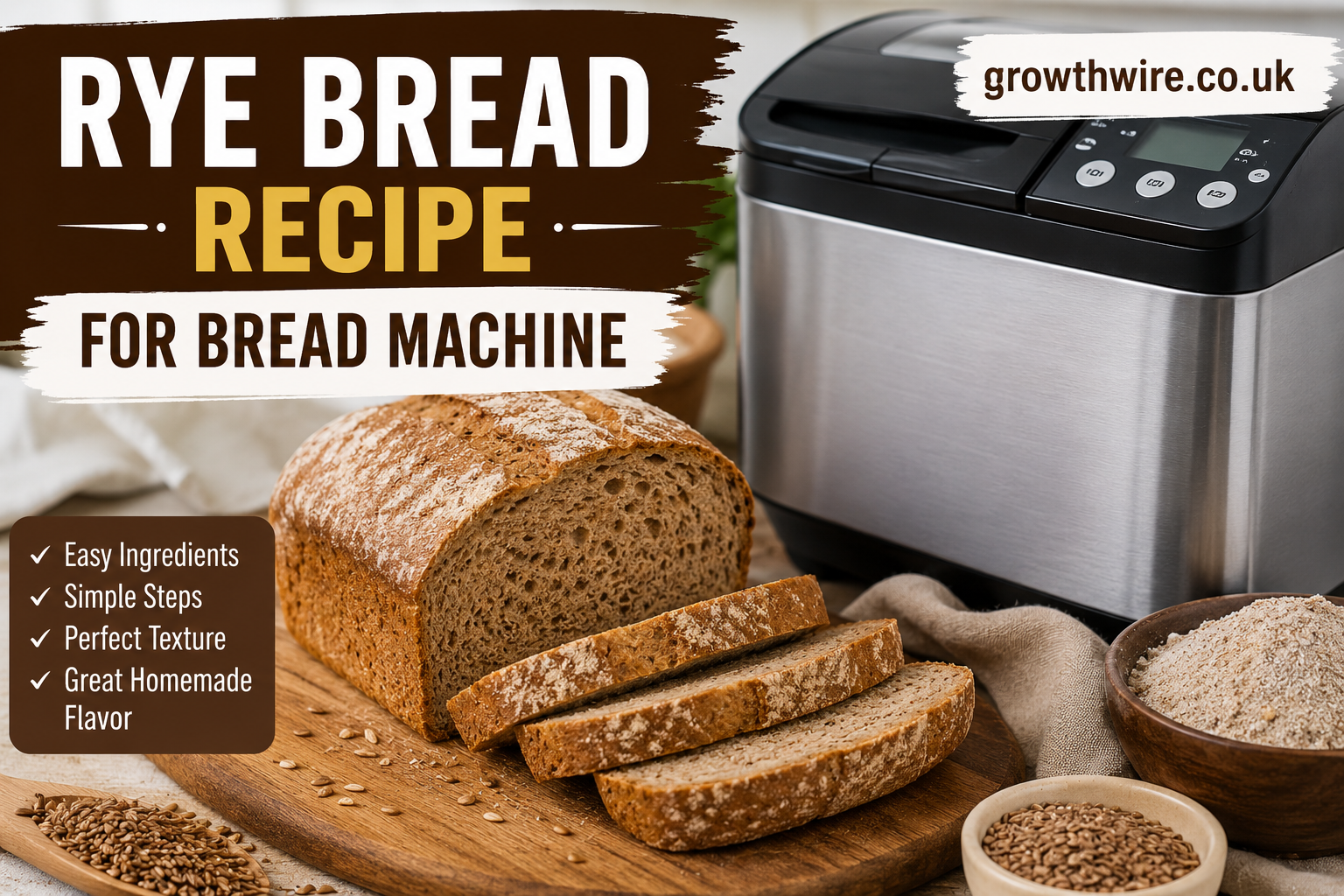
There’s something incredibly satisfying about the aroma of freshly baked bread filling your kitchen. If you enjoy making bread at home but want a simpler process, using a bread machine is an excellent solution. A reliable rye bread recipe for bread machine allows you to create flavorful, soft, and wholesome bread with minimal effort while maintaining consistent results every time.
Rye bread has long been a favorite across Europe and many other parts of the world because of its rich flavor, dense texture, and nutritional benefits. Unlike traditional white bread, rye bread offers a slightly earthy taste with subtle sweetness that pairs beautifully with everything from soups and salads to sandwiches and breakfast spreads.
This guide covers everything you need to know about preparing the perfect rye bread recipe for bread machine, including ingredients, step-by-step instructions, baking tips, variations, storage methods, and answers to common questions.
Why Choose a Rye Bread Recipe for Bread Machine?
A bread machine removes much of the guesswork involved in bread making. Instead of manually kneading dough and monitoring proofing times, the machine performs these tasks automatically.
Benefits include:
- Consistent baking results
- Less hands-on preparation
- Perfect kneading and rising
- Fresh homemade bread with minimal effort
- Time-saving convenience
- Easy cleanup
Whether you’re a beginner or an experienced baker, a bread machine makes baking rye bread much more approachable.
Understanding Rye Flour Before Making a Rye Bread Recipe for Bread Machine
Before beginning your recipe, it’s helpful to understand rye flour itself.
Unlike wheat flour, rye flour contains less gluten. Because gluten creates the stretchy structure that traps air bubbles, rye bread tends to be denser than traditional white bread.
Common varieties include:
Light Rye Flour
- Mild flavor
- Fine texture
- Ideal for beginners
Medium Rye Flour
- Richer taste
- Slightly darker color
- Balanced texture
Dark Rye Flour
- Deep earthy flavor
- Dense crumb
- Traditional European style
Many bread machine recipes combine rye flour with bread flour to improve structure while preserving rye’s unique flavor.
Ingredients for the Best Rye Bread Recipe for Bread Machine
The following ingredient list produces a soft loaf with excellent texture.
Ingredients
- 1 cup rye flour
- 2 cups bread flour
- 1¼ cups warm water
- 2 tablespoons vegetable oil
- 2 tablespoons honey
- 1 teaspoon salt
- 1 tablespoon caraway seeds (optional)
- 2 teaspoons active dry yeast
These ingredients create a balanced loaf that’s flavorful without becoming overly dense.
Equipment Needed
Fortunately, very little equipment is required.
You’ll need:
- Bread machine
- Measuring cups
- Measuring spoons
- Kitchen scale (recommended)
- Cooling rack
Using accurate measurements greatly improves consistency.
Preparing Your Rye Bread Recipe for Bread Machine
One advantage of bread machines is their simplicity.
Step 1: Add Liquids
Pour into the bread machine pan:
- Warm water
- Vegetable oil
- Honey
Step 2: Add Dry Ingredients
Carefully add:
- Bread flour
- Rye flour
- Salt
Keep salt away from the yeast initially.
Step 3: Add Caraway Seeds
Sprinkle the seeds evenly over the flour.
Although optional, they provide the classic rye bread flavor many people enjoy.
Step 4: Add Yeast
Create a small well in the flour.
Add the yeast directly into the well without touching the liquids.
Step 5: Select Machine Settings
Choose:
- Basic Bread
- Whole Wheat setting (if available)
- Medium crust
- 2-pound loaf (or according to your machine)
Then simply press Start.
What Happens During the Bread Machine Cycle?
A standard bread machine performs several stages automatically.
Mixing
Ingredients combine into dough.
Kneading
The machine develops gluten and distributes moisture evenly.
First Rise
Yeast produces gas, allowing the dough to expand.
Second Kneading
Some machines briefly knead again.
Final Rise
The loaf reaches its full volume.
Baking
The machine bakes until golden brown.
Why Bread Flour Works Better
Bread flour contains higher protein than all-purpose flour.
Advantages include:
- Better loaf height
- Improved texture
- Stronger gluten development
- Softer slices
- Better sandwich bread
Since rye flour has weaker gluten, bread flour helps balance the dough.
Tips for the Perfect Rye Bread Recipe for Bread Machine
Small adjustments can make a significant difference.
Measure Ingredients Carefully
Too much flour creates dry bread.
Too much water causes collapse.
Using a digital kitchen scale is ideal.
Use Fresh Yeast
Expired yeast leads to poor rising.
Always check the expiration date before baking.
Watch the Dough During Mixing
During the first kneading cycle, check consistency.
The dough should feel:
- Soft
- Slightly sticky
- Smooth
If needed:
- Add one teaspoon of water if dry.
- Add one teaspoon of bread flour if overly wet.
Avoid Opening the Lid During Rising
Opening the machine allows heat to escape.
This can reduce loaf volume.
Cool Completely
Allow bread to cool for at least one hour before slicing.
Cutting too early causes gummy slices.
Optional Ingredients to Customize Your Rye Bread Recipe for Bread Machine
Homemade bread is highly customizable.
Consider adding:
Sunflower Seeds
Adds crunch and nutrition.
Pumpkin Seeds
Creates hearty texture.
Flaxseed
Provides omega-3 fatty acids.
Oats
Makes bread softer.
Molasses
Adds deeper color and mild sweetness.
Chopped Walnuts
Perfect for artisan-style rye bread.
Dried Onion
Enhances savory flavor.
Fresh Herbs
Rosemary or thyme work particularly well.
Common Mistakes to Avoid
Even bread machines can produce disappointing results if mistakes occur.
Using Cold Water
Cold temperatures slow yeast activity.
Warm water encourages proper fermentation.
Too Much Rye Flour
Pure rye bread often becomes very dense.
Combining rye flour with bread flour improves texture.
Incorrect Yeast Placement
If yeast contacts liquid too early during delayed starts, rising may fail.
Inaccurate Measurements
Even small measurement errors affect bread quality.
Always level measuring cups.
Nutritional Benefits of Rye Bread
Rye bread provides more nutritional value than many refined white breads.
Benefits include:
- Higher dietary fiber
- Complex carbohydrates
- Iron
- Magnesium
- Potassium
- B vitamins
Many people also find rye bread more filling, helping with portion control.
Serving Ideas for Homemade Rye Bread
Fresh rye bread complements many meals.
Try serving it with:
- Butter
- Cream cheese
- Smoked salmon
- Turkey sandwiches
- Roast beef
- Tuna salad
- Avocado
- Egg salad
- Soup
- Stew
It also makes excellent toast.
How to Store Homemade Rye Bread
Proper storage keeps bread fresh longer.
Room Temperature
Store in a bread box or airtight bag for up to four days.
Refrigerator
Generally not recommended because refrigeration dries bread quickly.
Freezer
Slice before freezing.
Wrap tightly and freeze for up to three months.
Toast directly from frozen.
Can You Make a Healthier Rye Bread Recipe for Bread Machine?
Absolutely.
Healthy substitutions include:
- Olive oil instead of vegetable oil
- Whole rye flour
- Reduced honey
- Added flaxseed
- Chia seeds
- Oats
- Pumpkin seeds
These changes increase fiber and nutrients while maintaining delicious flavor.
Choosing the Right Bread Machine Setting
Different machines offer different programs.
Good options include:
- Basic
- Whole Wheat
- European Bread
- Artisan
- Homemade Program
Always consult your bread machine manual for recommendations.
Why Caraway Seeds Are Popular
Caraway seeds are closely associated with traditional rye bread.
Their flavor is:
- Slightly sweet
- Peppery
- Mildly citrusy
- Earthy
If you prefer a milder loaf, simply omit them.
Can Beginners Use This Rye Bread Recipe for Bread Machine?
Absolutely.
Bread machines are designed for beginners.
The process mainly involves:
- Measure ingredients.
- Add ingredients in order.
- Select the program.
- Wait until baking finishes.
The machine handles nearly everything else.
Troubleshooting Your Rye Bread Recipe for Bread Machine
Bread Didn’t Rise
Possible causes:
- Old yeast
- Cold water
- Too much salt
- Incorrect measurements
Bread Collapsed
Possible reasons:
- Excess water
- Too much yeast
- Warm kitchen
- Overproofing
Bread Is Too Dense
Often caused by:
- Excess rye flour
- Under-kneading
- Insufficient yeast
- Heavy dough
Crust Too Thick
Solutions include:
- Select light crust setting
- Remove bread immediately after baking
- Store while slightly warm
Delicious Variations of a Rye Bread Recipe for Bread Machine
Once you’ve mastered the basic loaf, experiment with different flavors.
Honey Rye Bread
Increase honey slightly for subtle sweetness.
Onion Rye Bread
Add dried minced onions.
Excellent for sandwiches.
Dill Rye Bread
Mix in dried dill for fresh herbal flavor.
Garlic Rye Bread
Add garlic powder and herbs.
Perfect with pasta.
Multigrain Rye Bread
Combine:
- Rye flour
- Oats
- Flaxseed
- Sunflower seeds
- Pumpkin seeds
Creates hearty artisan bread.
Frequently Asked Questions About Rye Bread Recipe for Bread Machine
Can I use all rye flour?
Yes, but the loaf will be much denser because rye contains less gluten.
Can I substitute all-purpose flour?
Yes, although bread flour generally produces better volume and texture.
Can I use instant yeast?
Yes.
Most bread machines work well with instant yeast.
Can I delay the baking cycle?
Yes.
Just avoid ingredients that spoil quickly, such as milk or eggs.
Why is my bread sticky inside?
Usually because it wasn’t cooled long enough before slicing.
Allow at least one hour of cooling.
How long does homemade rye bread stay fresh?
Typically:
- 3–4 days at room temperature
- Up to 3 months frozen
Expert Tips for Better Bread Every Time
Professional bakers recommend several habits that consistently improve homemade bread:
- Weigh ingredients instead of using volume measurements.
- Store flour in airtight containers.
- Keep yeast dry until mixing begins.
- Use filtered water if possible.
- Clean the bread pan thoroughly after each use.
- Replace worn kneading paddles when necessary.
- Experiment with small ingredient adjustments rather than large changes.
- Record successful recipes for future reference.
These simple practices can help you achieve bakery-quality results with every loaf.
Conclusion
A dependable rye bread recipe for bread machine makes it easy to enjoy fresh, flavorful homemade bread without the effort of traditional hand-kneading. By combining rye flour with bread flour, using fresh yeast, and following the correct ingredient order, you can produce a loaf with a tender crumb, satisfying texture, and rich, earthy flavor.
Whether you enjoy your rye bread toasted with butter, layered into hearty sandwiches, or served alongside soups and stews, baking it at home offers freshness and flexibility that store-bought loaves often lack. With a few simple ingredients and the convenience of a bread machine, you’ll be able to create delicious rye bread that suits your taste and becomes a regular favorite in your kitchen.
